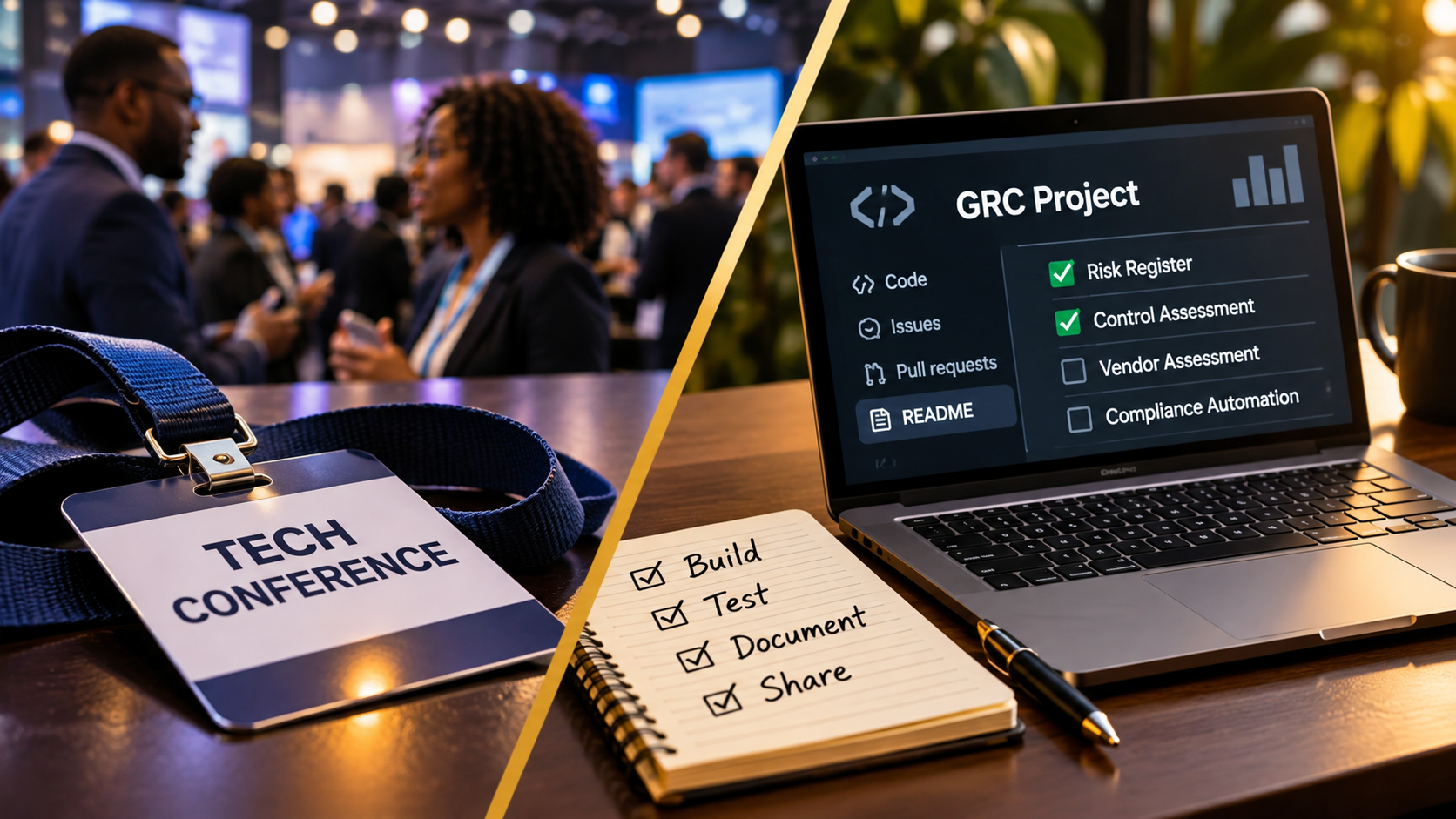
I love a good tech conference. I've encouraged our Atlanta GRC Engineering members to attend them, especially the free and low-cost ones. You can learn a lot in a room full of people willing to talk about what they're doing, and sometimes the best part isn't even on the agenda.
But I also know what it feels like to leave an event excited, with a phone full of new contacts, and still have no better answer to the question that brought you there: Where are the opportunities?
We're heading toward another conference season, and I think we need to talk about that gap.
Hope Doesn't Equal Hiring
Conferences are good at generating excitement. Big stages, big sponsors, career panels, recruiters, and promises about the future of technology. That excitement is real. So is the bill for a ticket, a hotel, travel, and time away from everything else.
What isn't guaranteed is a job.
A cybersecurity workforce shortage estimate isn't the same thing as a funded opening. An employer can sponsor a conference without hiring for your role. A recruiter can be genuinely helpful and still have nothing to offer you right now.
And the market is hard. People with experience are struggling to find their next role. People trying to break in are told to get experience before anybody will give them a chance to earn it. Black professionals and others who are underrepresented in tech face those same problems, plus barriers that have been around for years.
I don't want us pretending another motivational panel is going to fix that.
A recent Emerald Book article about AfroTech asks whether the conference's growth has translated into real opportunities. Those questions are worth asking, but they shouldn't stop at Black tech conferences. What are we expecting from the RSA Conference and the other major cybersecurity events? What are the employers and sponsors doing after the booths come down?
Minority-focused conferences shouldn't have to solve an industry-wide hiring and representation problem by themselves. And Black professionals shouldn't have to attend only Minority-focused events to find a welcoming room.
HOPE ≠ HIRING
I want us to remember that when we're deciding where to spend our money.
Don't Buy a Ticket Without a Plan
I've promoted affordable community conferences and local events because you don't always need an expensive pass to meet talented people or learn something useful. Sometimes a free meetup, a BSides event, or a hands-on workshop will give you more than a giant expo floor.
Before registering, look at the agenda and ask yourself what you're buying. Is there a skill you want to practice? A practitioner whose work you follow? A workshop you can actually use? An employer with an open position that matches your experience?
If you're going to talk to recruiters, ask whether their teams have funded openings. If you're talking to practitioners, ask what they're building, what breaks, and what they wish newcomers understood. Those answers can be more useful than a generic list of certifications.
And don't let the number of LinkedIn connections you collect become your measure of success. A conversation is a start. What happens afterward matters more.
INSPIRATION ≠ OPPORTUNITY
Bring Something You've Built
Here's my challenge to aspiring GRC engineers in 2027: don't show up to your next conference with only a resume. Bring something you've built.
It doesn't have to be fancy. Put a sample risk register in GitHub. Create a vendor assessment workflow. Build a simple compliance check. Document how you'd evaluate a control, what evidence you'd want, and how you'd track a gap. Use fictional or otherwise shareable information, not your employer's confidential records.
Then show somebody.
Ask a working practitioner what they'd change. Ask a speaker whether your approach makes sense. Ask a hiring manager what they'd expect to see in a real environment. If somebody gives you feedback, go improve the project and tell them what changed.
See how those conversations go.
I'm not promising that a GitHub repository will get you hired. It won't create jobs, reverse hiring freezes, or make unfair hiring practices disappear. We shouldn't put the responsibility for fixing the market on the people trying to enter it.
But showing your work changes what you can talk about. Instead of asking only how to get into GRC, you can discuss the decisions you made, the problems you hit, and what you learned. That's the kind of practical mentoring I've been pushing in our chapter.
I've made a similar argument in the Year-End GRC Playbook: when hiring is slow, finish something useful, protect your momentum, and give yourself more to show when a real conversation happens. The GRC Vibe Coder's Playbook is one place to start if you're not sure how to turn an idea into a small project.
We Should Expect More From Conferences, Too
I want organizers and sponsors to think beyond attendance numbers and resume collections. Let attendees show their work to people who actually do the job. Run workshops where people build something. Be clear about who's hiring. And give people a reason to stay in touch after the event.
And keep the cost of participating in mind. A great professional community shouldn't require everybody to afford a conference trip.
The GRC Engineering Club's free AntiCheckbox Virtual Summit, scheduled for March 30–31, 2027, is one option worth considering. It's open to members and non-members, with live evidence demos, guided labs, and practical stories from people doing the work. Free admission won't fix hiring, but at least the ticket price won't keep somebody out.
I'll keep recommending conferences when I think they're worth our members' time. I'll also keep recommending the smaller, cheaper rooms where people can ask questions and get their hands on something real.
Employers need to open more doors. Conferences need to be clear about what they're offering. And we need to be smarter about which rooms are worth our time.
So here's the question I want you to take into 2027: What are you bringing to your next conference besides your expectations?