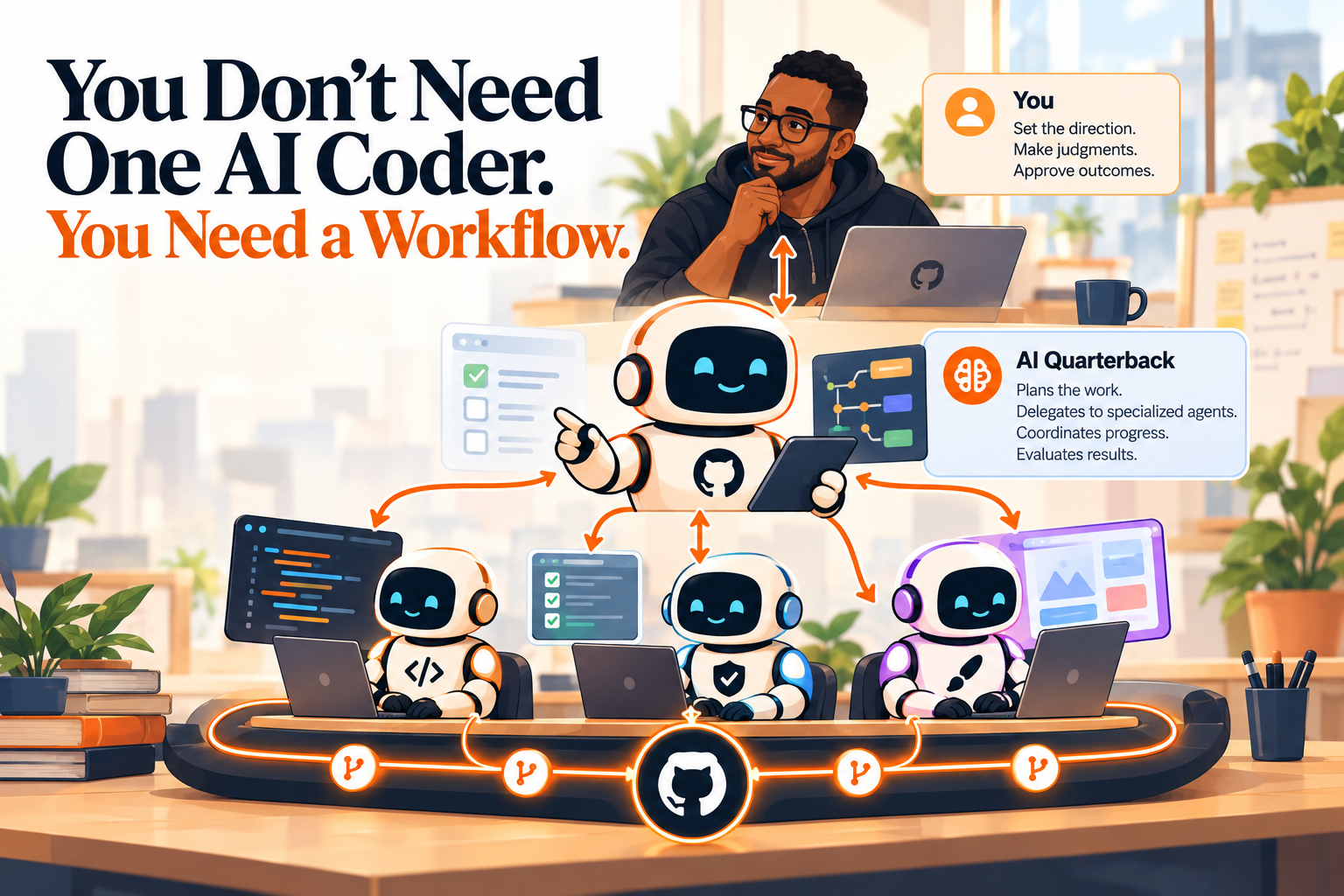
In Building Is the Skill That Raises All Ships, I made the case for getting out of the endless cycle of preparing to build and actually making something. But once you start, another problem shows up pretty quickly: which AI coding tool should you use, and how do you keep it from making a mess?
I've learned that the answer is less about finding the one perfect model and more about developing a workflow you can trust. That's what I mean by vibe coding: using AI to help create software while you stay responsible for the goals, the review, and what gets shipped.
Plan before you prompt
It is tempting to describe an idea, ask an AI to build the whole thing, and see what happens. Sometimes that gets you a useful prototype. Other times it gets you hours of rework and a pile of tokens spent solving problems you could have spotted with ten minutes of planning.
Try writing down who the project is for, what it must do, what it should not do yet, and how you will recognize a working result. Keep It Simple, Stupid (KISS) is a useful reminder to avoid unnecessary complexity. Bottom Line Up Front (BLUF) helps you ask for a clear recommendation before the explanation. Structured approaches such as BMAD can help with larger projects, but you can ask an AI to apply their principles without mastering an entire methodology on day one.
One planner, several builders
I like the idea of keeping one planning conversation focused on the mission while assigning specific tasks to different AI coding tools. A visual builder might help with a website layout. Another agent might be better suited to investigating a complicated bug, implementing tests, or reviewing a large repository.
The planner should not simply take every agent's word for it. It needs to look at the results: the changed files, the pull request, the preview, the tests, and the original requirements.
GitHub is the foundation
The most valuable part of this approach is not the collection of AI tools. It is having a shared place where the work survives them.
A meaningful commit saves a checkpoint. A branch keeps unfinished work separate. A pull request shows what changed and invites review. A short project brief, README, and decision log let another agent understand the mission without guessing what happened in an earlier chat.
That last point matters. GitHub does not magically preserve an AI chat's private memory. You have to put the important context in tracked files. When you run out of tokens, switch models, or come back after a week away, those notes can save you from starting over.
Plan. Build. Commit. Validate. Improve. The loop is simple on purpose. You can repeat it with one AI tool or several.
Try it with a real project
Imagine building a small vendor risk assessment tool. Before asking for code, define the questions it asks, how it scores answers, what its output means, and how a person will review that output. Then build one small piece, commit it, inspect the result, and repeat.
That is the example we'll use throughout The GRC Vibe Coder's Playbook, a six-lesson resource with copyable prompts, practical exercises, and guidance on choosing tools for the task at hand.
You do not have to become a software engineer before you start. You do need to become someone who can explain what they asked for, inspect what they got, and decide what happens next.